


The president of the United States has made it a habit to kick the bodies of critics who've passed away. We must choose whether his cruelty is a stain on our country… or a facet of our national character.
Former FBI Director Robert Mueller died this past weekend. Within minutes of the news breaking, Donald Trump posted on social media:
“Good, I’m glad he’s dead. He can no longer hurt innocent people!”
The comment earned deserved condemnation from Democrats, from some Republicans, from veterans and legal scholars and ordinary citizens who still believe there’s some kind of a floor of decency that even a president of the United States shouldn’t breach.
I was so disgusted by the whole episode, I’ll admit that I tried to tune it out this weekend. Then I was asked about it last night on CNN. Clip below. It made me think about how this is more than a contemptible one-off. Such behavior is a facet of Donald Trump’s character.
Before Mueller, there was Rob Reiner, of course. The award-winning director was brutally murdered late last year, after which Trump suggested the director had somehow deserved it and died of “Trump Derangement Syndrome.” Before Reiner, there were years of similarly sickening comments along these lines (soldiers who’d died in combat being “losers,” opponents who’d passed from illness, etc).
One of those cases hit me personally.
In the summer of 2018, I was traveling with the DHS Secretary on our way to Australia for an intelligence conference. We were halfway across the Pacific when a press aide came to the front of the cabin to tell us Senator John McCain had died from brain cancer. The news hit me hard. McCain was one of the first elected officials I’d met as a young page on Capitol Hill, and one of the last I still genuinely respected. I lowered my baseball cap over my face and tried to collect myself.
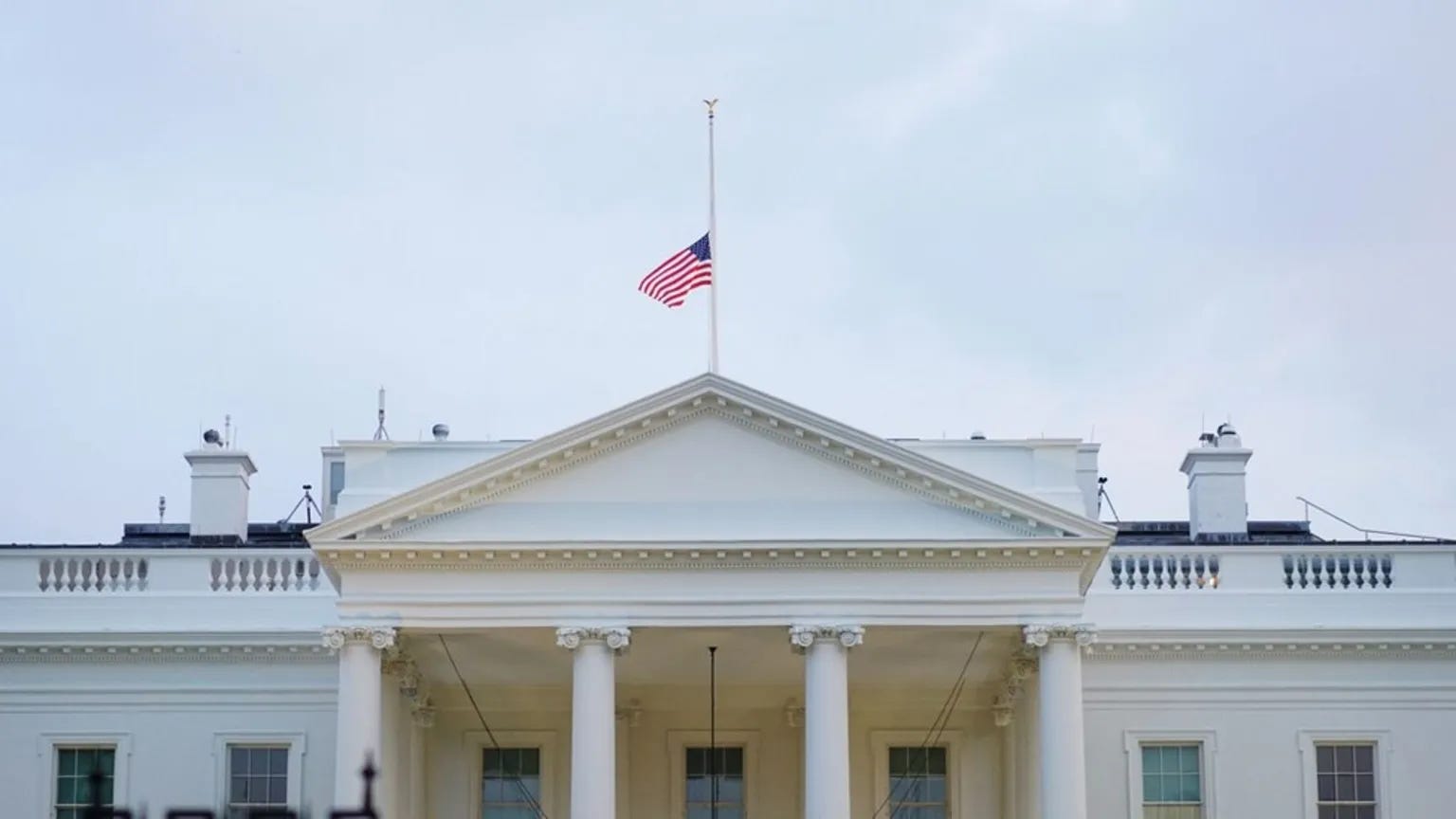
That night at the hotel, both my phones started ringing. Alternating. Someone was trying to get in touch urgently. The number? 202-456-1414. The White House switchboard. I was informed that the president was furious. The flags across the country had been lowered to half-staff in honor of a sitting U.S. senator and American war hero who the president despised.
Trump wanted the flags back up. And he wanted to know who had ordered them lowered.
I checked with our staff. Then I phoned back to White House Chief of Staff John Kelly and his team. I confirmed to the White House that, yes, we at DHS had issued the order for the flags to be at half staff. Standard procedure. And I added that if the president was asking us to raise the flags back up, the answer would be no, and if that answer was unacceptable, he could fire us.
Thankfully, John Kelly managed to convince Trump not to touch the flags for the time being and to let the issue go.
But it was that night — sitting alone in a hotel in Australia in a T-shirt and boxers — that I opened my iPad and wrote what would eventually become the New York Times “Anonymous” op-ed. I was furious. I felt a kind of grief. Not just for McCain, but for what we’d allowed the presidency itself to become.
The Founders were not naïve. They understood that people in power would be tempted to abuse it. So they built a Constitution to account for that depravity, constructing myriad systems for checking power and balancing the expected avarice of mere mortals who might enter politics for the right reasons but be tempted to us higher office for personal gain or petty retribution.
But there was something they actually feared even more than a corrupt leader. They feared the people themselves might willingly elect one — and keep him.
George Washington said “virtue or morality is a necessary spring of popular government,” and John Adams was even blunter:
“Public virtue cannot exist in a nation without private virtue, and public virtue is the only foundation of republics.”
The Founders understood that a self-governing republic was only as good as the moral character of its citizens. They also recognized that the character of a president, chosen by the people, would inevitably reflect back on the people who chose him. (That’s one of the reasons I nearly titled my first book, The Character of a Nation instead of A Warning.)
Alexander Hamilton wrote in Federalist No. 68 that the process of presidential election was designed to offer “a moral certainty that the office of President will never fall to the lot of any man who is not in an eminent degree endowed with the requisite qualifications,” and that there would be “a constant probability of seeing the station filled by characters preeminent for ability and virtue.”
Yet Hamilton was wrong. Or rather, he was right about the intent of their constitutional design but wrong about the strength of its failsafes. The “moral certainty” Hamilton had was, in fact, more of a moral hope that we wouldn’t deface our institutions by elevating a vandal into the nation’s highest office.
He also warned, at both the beginning and end of the Federalist Papers, against demagogues who would undermine republican government by flattering the people, exploiting their passions and fears to seize power, then turning against those who elevated them. He viewed demagoguery as among the gravest threats to the republic.
You can see how we’ve made Hamilton’s nightmares real.
Donald Trump’s post about Mueller’s death is not a momentary defect in the system. It’s the machine running exactly as intended — that is, when it’s been hijacked by a man of such low moral character. Despite the fact the Director Mueller served as FBI chief for twelve years under two presidents, rebuilt the bureau after 9/11, and served his country as a decorated Marine in Vietnam, we put in office a president all-too-eager to celebrate the death of a patriot because Trump viewed him as a critic in the wake of the Russia investigation.
Noah Webster (who helped shape this republic’s very language) wrote something worth remembering here:
“If a republican government fails to secure public prosperity and happiness, it must be because the citizens neglect the divine commands, and elect bad men to make and administer the laws.”
So let us ask ourselves plainly: when Trump stomps on Mueller’s grave, whose hands are also on the shovel?
In a republic, the election of a president is an act of collective moral judgment. It’s the people saying that this man represents us. When we choose someone who celebrates the death of his critics (and does she with some regularity), then we have said collectively that this is who we are. And when that happens, we realize the fears of another Founder, John Adams, who wrote that “when public virtue is gone, when the national spirit is fled, the republic is lost in essence, though it may still exist in form.”
But that’s an intolerable verdict. Isn’t it?
Well, the good news is that we don’t have to accept it. Sure, we could just throw in the towel and admit that Trump’s shortcoming are our own sins — and drop to our knees, admitting that we have failed the Founders. Or, we could repent. We could say re-electing him was a catastrophic civic mistake. In fact, we don’t need to wait until the 2028 election to render a different judgment. We can do it this weekend.
This coming Saturday, millions of people are expected to take to the streets for the third No Kings protest. The demonstrations are, at their core, about exactly this question. Would-be protesters across America will get to decide whether Trump’s cruelty is our cruelty by proxy… or whether we repudiate it loudly in the streets.
Whether or not you march on Saturday might just be your answer to a question the Founders never thought we’d have to ask: whose character does this president represent, anyway?
It doesn’t have to be ours.
Your friend, in defiance,

Incredibly powerful. I would love to share this with his voters and see how they respond. It cuts through the noise, powerfully.
Definitely. Our Nation is being led by a Gestapo and his minions who have personal interests in foreign countries. As a result they are focused on protecting their interests while destroying the lives of American soldiers and their families