


Donald Trump is making it vastly easier to hack our elections. And almost no one is talking about the real reason why.
For years, foreign adversaries have probed American elections in search of a single point of failure or internal system they could compromise in order to sway the results or influence ballots in key swing states. They never found one, for the simple reason that it didn’t exist. At least not until now. While election systems were previously decentralized in each state and municipality, the Trump administration is building a federal system that would be far easier to manipulate and could fundamentally undermine the integrity of American elections.
I’m familiar with the tools they’re using. I used to oversee them. If allowed to proceed, the White House would effectively be installing a Trojan Horse inside of our democracy.
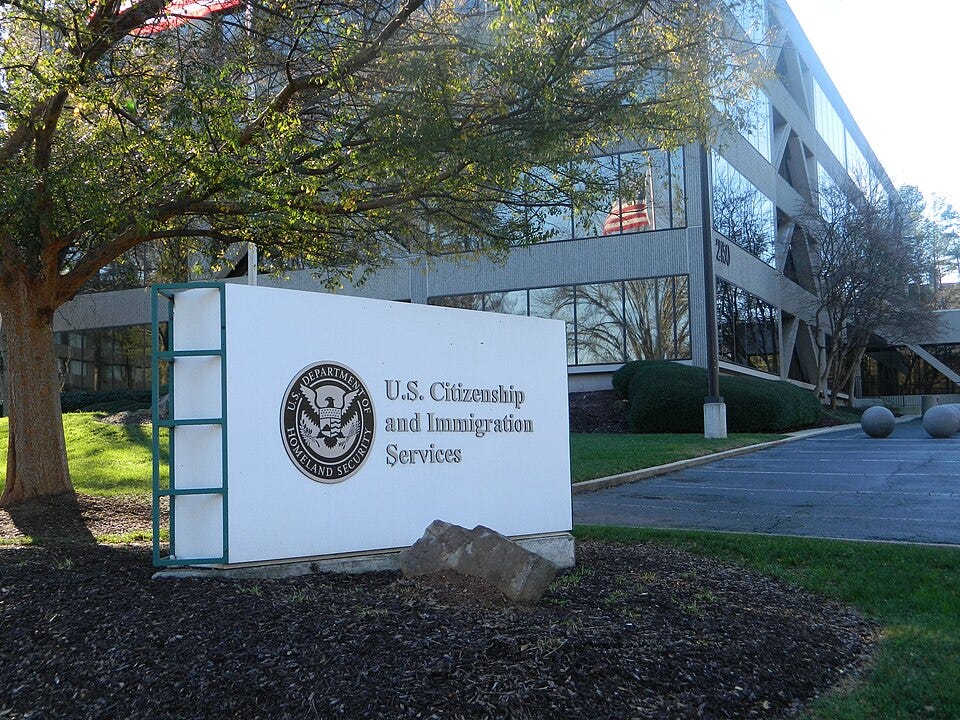
In plain terms, the Department of Homeland Security (DHS) has taken an obscure internal tool called SAVE — the Systematic Alien Verification for Entitlements program, originally built to check whether immigrants qualify for government benefits — and is converting it into the central checkpoint for deciding who is eligible to vote in the United States. To feed it, the administration has been vacuuming up data from every direction, including Social Security records, passport files, and, wherever it can get them, the states’ own voter rolls. The apparent goal is to run every registered American through a single federal system that renders a red-light, green-light on their right to cast a ballot. Nothing like that has ever existed in American history, and rightfully so. But now it’s being assembled months before a national election, with potentially severe repercussions.
Most public discussion so far about this controversial plan has rightfully focused on its glaring unconstitutionality. States administer elections, not the federal government, which is why federal judges have told the Trump administration to halt its efforts. The White House doesn’t have a right to say who gets to vote. Undeterred, the Trump team went to the Supreme Court days ago seeking emergency permission to restore the program while voting season approaches.
But equally as alarming is how the plan would introduce new vulnerabilities into our entire election system. Those dangers haven’t been fully appreciated because, frankly, most observers have no idea what SAVE is or how this backwater bureaucracy operates. Former homeland security officials like myself have watched in slow-motion horror as the administration moves to hand control of American elections to a tiny DHS office (partially run by contractors) that receives the least congressional oversight and scrutiny of almost any corner of the department.
I watched this problem from the inside long before Trump came along. Early in my career, I worked on the House Appropriations Committee overseeing homeland security spending, and the “fee-funded” corners of DHS were a perennial headache. You see, Congress’s real leverage over any agency is the power of the purse — the fact that agencies have to ask for their allowance every year from the legislature. But SAVE barely touches the purse. Why? Because it’s tucked within a DHS sub-agency, U.S. Citizenship and Immigration Services (USCIS), and financed through immigration application fees, not annual appropriations from Congress.
In my experience, offices like that behaved like fiefdoms, because functionally they were, i.e. they were self-funding, self-directing, and accustomed to minimal scrutiny. That also means they’re places where it’s especially tough to shine a light.
What’s more, SAVE wasn’t built to have anything to do with elections. It was built to stop benefits fraud and to keep ineligible people from signing up for welfare. As of this writing, I couldn’t even fully determine which American companies and contractors are currently in charge of helping USCIS administer the system. How can we know what they’re doing if we don’t even know who they are? Handing such a program sweeping powers over American elections is a recipe for disaster. And we don’t need to speculate because we already have examples of how flawed the system is.
In Missouri, for instance, officials acted on SAVE’s findings about alleged “noncitizen voters” before verifying them, directing clerks to make flagged individuals temporarily unable to vote; in hundreds of cases the tool was simply wrong, and in one county more than half of those flagged as noncitizens proved to be U.S. citizens. In another case, Texas flagged 2,724 voters as suspicious based on SAVE data and began demanding proof of citizenship, only to discover some of those removed already had proof on file with the state, which ordered them reinstated. The victims are disproportionately naturalized citizens. And after seven states ran roughly 35 million voters through the machine, the total of suspicious voters came to about 4,200 (one-hundredth of one percent) and still many of them were wrong.
Yet this historically flawed database is now being deployed at scale to determine whether individuals get to exercise their fundamental democratic rights. The administration is using it to purge people from the voter rolls, even though it’s not clear who has final say over the names introduced into the system, how the adjudications are being done, and how — if at all — an American can seek redress for being falsely flagged as an “illegal” voter. Worse still, the cybersecurity of the system is a black box.
I served at DHS in the aftermath of Russia’s 2016 assault on our election infrastructure, when we were still mapping what Moscow had done. In its comprehensive review, the Senate Intelligence Committee found that Russian actors targeted election systems in all fifty states; in one, Illinois, they evidently penetrated the voter database and were “in a position to delete or change voter data.” So why weren’t they able to manipulate the election outcome? Well, one reason is that there wasn’t some central nervous system for them to attack. Our elections are scattered across those all of those fifty states and thousands of counties, on different systems built by different vendors. So breaking into Illinois only got them as far as Illinois.
The FBI director at the time, James Comey, explained it memorably to Congress: the American vote system “is very, very hard for someone to hack into because it’s so clunky and dispersed.” The clunkiness he described was not a constitutional design flaw. It was (and remains) one of our best defenses.
Now imagine that same adversary studying the system that Donald Trump is constructing right now. A savvy hacker could hypothetically be within reach of influencing the votes of some 180 million registered Americans at once. Worse still, because the SAVE system is tied to a vast array of federal databases, every error and introduce into its underlying records could cascade through the system at national scale with even more far-reaching implication. No bad guy would need to hack into three thousand separate counties on Election Day. They’d just need one intrusion into a single centralized system, and they could conceivably do it many months in advance. That’s what you’d call a Trojan Horse.
The simplicity of this is glaring and terrifying. A hacker in Moscow or Beijing wouldn’t need to get their hands on U.S. voting machines or plant malware or even flip a single vote. If Trump gets his way, they’d only need to hack DHS and corrupt the records of voters in a handful of swing districts — perhaps voters whose neighborhoods reliably favor one party — so the SAVE system flags them as ineligible. Then each rejection would look more like a paperwork problem than foreign meddling. And since it’s already widely known that SAVE wrongly rejects citizens because of its own existing deficiencies, no one could easily prove it was an attack at all.
If my former Republican colleagues will not wake up to the national security dangers here, then they better pay attention on political ones. Whatever election-control system Donald Trump is creating doesn’t go away with Donald Trump. By creating a centralized “eligibility switch” for voting, they’re ceding extraordinary power to whoever occupies the White House, including a future Democratic president. They’re allowing for a single point of failure to upend our democracy — and to put their own election races at risk.
In view of all of this, the states that have been refusing to feed their voter rolls into the Trump administration’s voter-checking machine aren’t obstructing election integrity. Right now, their resistance is the best defense we have. Thankfully, they’ve beaten the administration again and again on this in court.
Ten years ago, our decentralized elections withstood the most determined foreign attack in our history. A centralized one will not stand a chance, because a single success is all an adversary needs. The Russians spent years hunting for America’s master switch and went home empty-handed. We cannot let Donald Trump finish the job for them.
Your friend, in defiance,

DEFIANCE DAILY
In case you missed it, Friday night’s episode of DEFIANCE Daily is below. Catch our next episode tonight at 5 pm ET!

THE ANT HILL IS OUR MEMBERS-ONLY CORNER OF THE COLONY, WHERE “DEFY ANTS” GET MORE THAN JUST THE NEWSLETTER.
TODAY’S FEATURES: THE DEFIANCE WATCHLIST AND TUNNEL TALK
IF YOU’RE ALREADY A DEFIANCE MEMBER, THEN MARCH RIGHT IN. IF NOT, SIGN UP HERE, SO YOU DON’T MISS A THING.
