


The president of the United States went after journalists for the apparent “crime” of reporting stories that embarrass him. This week, a federal judge thwarted Donald Trump’s plans.
When FBI agents showed up outside the homes of New York Times reporters on a Friday night two weeks ago, the journalists were surprised and alarmed, as several later recounted. In a country with a free press, federal agents don’t just appear at your door, especially not when your job is to cover the White House. And they don’t do it armed with subpoenas and demanding to know the identities of those journalists’ sources.
Donald Trump on the other hand was not surprised. The scene was one he’d spent many years rehearsing. To understand how he’d set the stage, you have to travel back in time a bit.
I won’t forget the president’s reaction in 2018, after I published an anonymous opinion piece in the pages of the Times, warning the public about what was happening behind the scenes. He was incensed that anyone would defy him from within his own administration and say publicly what his own team had been saying privately — that he was erratic, impulsive, and attracted to abuses of power. He wanted to force the news outlet to unmask the seditious criminal.
“TREASON?” Trump tweeted. To the president, internal criticism was subversive and, perhaps, punishable by death. He continued:
“Does the so-called ‘Senior Administration Official’ really exist, or is it just the Failing New York Times with another phony source? If the GUTLESS anonymous person does indeed exist, the Times must, for National Security purposes, turn him/her over to government at once!”
Trump tried to spin up an internal investigation, including via the White House chief of staff’s office and the Justice Department. But his own appointees balked. Like anyone else, the lawyers could see plainly that such critiques of the president were First Amendment protected speech. No matter how embarrassing the op-ed was, they knew that criticism of a president is not “classified,” nor is it a crime.
The president fumed. He spent years in anger at DOJ for not taking up the case, not exposing Anonymous, and not punishing the Times for daring to publish the writer’s words. And somehow he continued to miss the irony. Anonymous had accused him of abusing his power. Now he was attempting to hunt down a critic by… abusing his power.
“This is a disgrace to our country,” he bemoaned at a campaign rally in 2020 after I unmasked myself. “It shouldn’t happen. And he should be prosecuted. Are you listening to me back in Washington? He should be prosecuted!”
Unfortunately, they were not listening back in Washington. And Trump never forgot it.
When he returned to the White House four years later, the president took care of unfinished business. Trump personally made it a “first 100 days” priority to fix what his disloyal first-term lieutenants had refused to fix. He sat down in the Oval Office in April 2025, in front of television cameras, and signed an order directing his administration to investigate me for “treason.” If federal agencies wouldn’t open up such a case on their own, he would open the case himself — something no president had done in American history.
But there was something almost as notable. This time, Trump’s DOJ was listening. His underlings complied, evidently indifferent to the fact that former federal judges and elected leaders had pointed out that the directive was “profoundly unconstitutional.” No matter. Within days, Attorney General Pam Bondi issued a companion directive rolling back the Department’s ban on subpoenas for reporters, citing the investigation the president had ordered into me as DOJ’s justification.
The logic appeared to be: If we can’t catch these leaking traitors on our own, we’ll force reporters to tell us who they are. Perhaps more than that, Bondi’s order set the stage to fulfill one of Trump’s longest-held fantasies: to go after the real “enemy of the people” — not the Miles Taylors of the world — but the American free press. After all, they were the ones who printed what the president did not want printed.
Fifteen months later, the president got his way.
After The New York Times published a story about Trump’s Qatari-gifted Air Force One, he summoned his FBI director to the White House. There, the nation’s top law enforcement official holed up outside the chief of staff’s office and ran an ad hoc investigation into the embarrassing news story, which validated the long-held worry of national security experts that Trump’s luxury jet had security vulnerabilities — and that he never should have accepted such a gift from a foreign government.
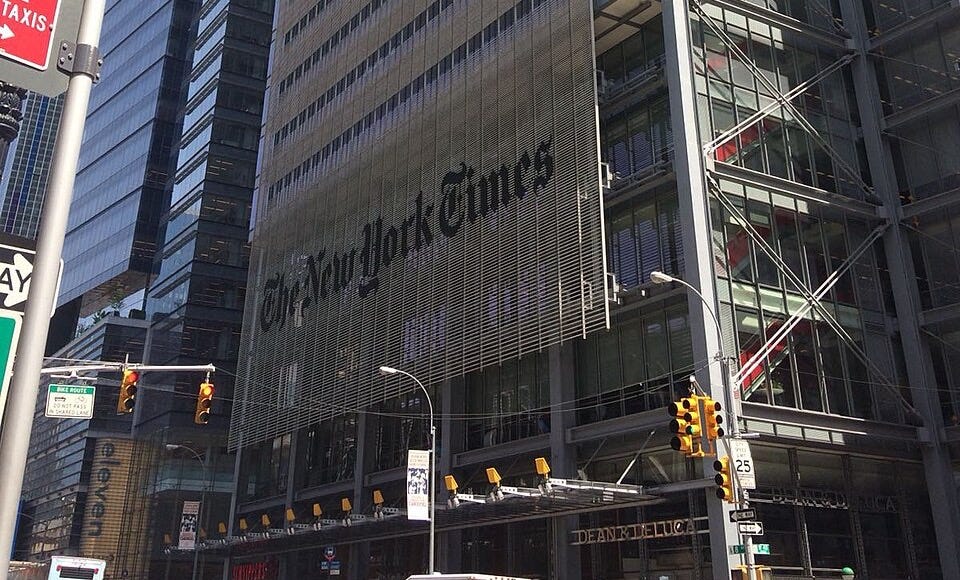
Trump administration prosecutors then used their newfound powers to subpoena four New York Times reporters (and their families) over the story. U.S. Attorney Jay Clayton, Trump’s nominee to run the entire U.S. intelligence community, signed off. Acting Attorney General Todd Blanche personally approved the subpoenas, too, as he confirmed under oath at his own confirmation hearing last week.
I suspect the president slept well that Friday night. He’d spent nearly a decade trying to get the federal government to see the powers of the presidency the way he saw them. The Deep State had run amok, refusing to break laws on his behalf. The press was in cahoots, constantly reporting on the defiance to his lawless directives. And he must be allowed to wield his power to punish them all for their insolence. Finally, Trump had a team that seemed to see it the same way.
Yesterday, it blew up in his face.
U.S. District Judge Arun Subramanian grilled federal prosecutors in Manhattan this Thursday in a case that will be cited for many years. He raised what he called “profound First Amendment” concerns with the administration’s actions. He openly questioned whether the government had even tried alternative avenues before hauling in the press to shake them down for their sources. He threatened sanctions over what may have been false statements in the government’s own subpoena application. And, in one of the courtroom moments of the year, he called out the FBI for serving one journalist while the man was at home watching a movie called “The Sheep Detectives” — about sheep seeking to solve the murder of their shepherd — noting that the DOJ had managed to fall short of the moral standard set by a children’s movie.
“I can’t think of anything more inconsistent with ‘Sheep Detective’ than an FBI agent showing up at your door,” the judge deadpanned. He made DOJ’s lawyers assure him it wouldn’t happen again.
The Justice Department withdrew the subpoenas altogether.
I want to be clear about why Trump’s DOJ lost this case. It wasn’t just because a judge intervened to stop something very bad from happening. It was because the Times refused to roll over. Its lawyers filed a motion to quash the subpoenas instead of quietly producing the records, which they could’ve done, capitulating as other news organizations have to Trump’s intimidation. When pressured, some news outlets have changed their reporting; others have written checks to the president to settle frivolous lawsuits.
Yet the Times had no interest in “making a deal.” They wanted to make the Trump administration look at the Constitution and respect it. And for taking on that fight, they’ve performed a service for YOU that you may not have realized they were performing. The paper made it harder for the government to censor what you read; they made it harder for the president to keep a lid on stories that might embarrass him; and they made it just a little bit harder for any administration to silence dissent. A precedent has been set.
Of course, this isn’t the end of the story. The White House and DOJ are composing themselves and will surely plot their next affront to the First Amendment. Other outlets will be tested in the years to come — and sooner.
Tonight, the test moves to a ballroom in D.C. The White House Correspondents’ Dinner, postponed since April’s shooting, is finally happening, and hundreds of veteran journalists along with eight press freedom organizations are publicly demanding the White House Correspondents’ Association use the occasion to “forcefully stand up” for press freedom with Trump sitting in the room. Of all nights, this is not one to make nice with the president. They cannot pretend a year of subpoenas, the arrests of reporters, threats to broadcast licenses, and leak investigations never happened.
We’ll see whether the room finds its spine. If they decide to search, the New York Times and an honorable federal judge just showed them where to look.
Your friend, in defiance,

IF YOU’RE A MEMBER, YOU CAN READ THE REST OF THE NEWSLETTER BELOW THE LINE. IF NOT, SIGN UP HERE!
